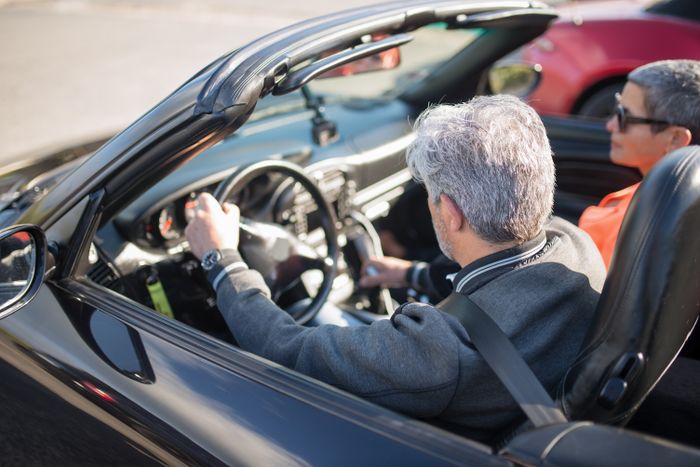
The general rule in auto insurance is that coverage follows the vehicle. If you let a friend drive your car and they crash, your policy is primary; the driver's own policy, if any, is secondary. That rule has enough exceptions to be worth understanding before you hand over the keys.
Permissive use
Most policies cover anyone driving your car with your permission, at the same limits you carry. Your deductible applies to your car's damage, and an at-fault crash goes on your policy's claims history.
When it may not apply
- Excluded drivers: if you've specifically excluded someone (often a household member with a bad record), your policy won't cover them at all.
- Regular drivers who aren't listed: a roommate, partner or adult child who drives the car often should be on the policy. Insurers can deny claims for undisclosed regular drivers.
- Unlicensed or impaired drivers, or drivers using the car for hire
- Business use beyond what the policy allows
Borrowing someone else's car
Your policy generally provides liability coverage when you drive a borrowed car, secondary to the owner's policy. Damage to the borrowed car falls under the owner's collision coverage first; whether your policy covers a non-owned vehicle's damage varies.
Rental cars
Your policy's liability coverage typically extends to rentals in the U.S., and collision coverage often does too, though the rental company's loss-of-use and administrative fees may not be covered. Credit card benefits sometimes fill the gap. Check before declining the counter coverage.
Household members
Anyone living with you who has a license should generally be listed, even if they rarely drive. It's the most common source of claim disputes.
Policy language governs; read the "who is an insured" and exclusions sections, or ask. This is general information, not insurance advice.
Questions to ask before you hand over the keys
Lending a car is usually a favor, not a transaction, so the conversation tends to be short. A few questions up front can prevent an awkward claim later.
- Do you have a valid license, and is it currently active?
- Do you carry your own auto insurance? If so, it may act as excess coverage.
- What's the trip for? Personal errands are one thing; food deliveries or rideshare driving usually aren't covered.
- How long will you need the car? A weekend is different from a month.
- Will anyone else be driving it?
Then look at your own policy. Most extend the same limits to permissive drivers, but a few reduce coverage for them, sometimes to the state minimum. If yours does, a friend's crash could exhaust your coverage faster than you'd expect.
Keep your insurance card and registration in the car, and tell the borrower where they are. Share your insurer's claims phone number too, so they know who to call if something happens and you can't be reached.
If a borrower crashes your car
Because your policy is primary, the claim usually starts with you, even though you weren't there. Report it to your insurer promptly and pass along the borrower's contact details and, if they have one, their insurance information.
Your collision coverage pays for damage to your car, minus your deductible. Who covers that deductible is between you and your friend; the policy doesn't decide it. If the borrower caused injuries or damage to someone else, your liability coverage responds first, and the borrower's own policy may pick up costs that exceed your limits.
If another driver caused the crash, your insurer may pursue that driver's insurer to recover what it paid, and possibly your deductible along with it.
Expect your insurer to want a statement from the borrower, a copy of the police report if there is one, and photos. The claim will generally appear on your policy's claims history. Whether it affects your premium depends on your insurer, your state and who was at fault, so ask how it will be rated before you assume the worst.
A realistic example
Consider a hypothetical: Priya lends her hatchback to a coworker for a Saturday while his car is in the shop. Before handing over the keys, she checks that his license is valid, asks whether he has his own policy (he does) and confirms he's just running errands, not doing delivery work. She also checks her declarations page and sees her policy extends her full limits to permissive drivers.
That afternoon he scrapes a parked car while backing out of a tight space. He calls Priya, photographs both cars and leaves a note with her insurance details on the other car's windshield.
Priya reports the claim on Monday morning. Her liability coverage pays for the parked car's repairs, and her collision coverage pays for her bumper, minus her illustrative $500 deductible, which her coworker offers to cover. The claim goes on her policy's history.
Afterward, she decides future loans will stay short and occasional.
Common questions
Will my insurance go up if someone else crashes my car?
It might. Because your policy pays the claim, it typically appears on your policy's history. Whether it leads to a surcharge depends on your insurer's rules, your state and who was at fault. Some insurers look mainly at the listed drivers' records, while others consider claims on the vehicle regardless of who was driving. Ask your insurer how a permissive driver's claim is rated.
Can I lend my car to a friend for a month?
You can, but an extended loan may look less like occasional permissive use and more like regular use. Policies treat those differently, and an insurer could question a claim involving a driver who had the car for weeks without being listed. Before a long loan, call your insurer, describe the arrangement and ask whether your friend should be added to the policy temporarily.
Who pays if someone borrows my car and gets a ticket?
A moving violation such as speeding generally goes on the driver's record, not yours. Parking tickets and camera-issued tickets are often mailed to the registered owner, and in some places the owner is responsible unless they identify who was driving. The rules vary by state and city. Ask the borrower to handle any ticket they get, and keep records in case you need to name them.
Before lending your car for more than a day or two, call your insurer and describe the arrangement; that short call can head off a disputed claim later.