Severe weather damage (hail, wind, flooding, falling trees) is covered by comprehensive coverage, not collision. Claims spike after storms, which affects both the process and the people who show up offering help.
Document before you clean up
- Photograph the vehicle from every angle in good light, including close-ups of dents and broken glass.
- Photograph the surroundings: hail on the ground, downed branches, water lines.
- Save weather warnings or news reports for the date.
- Don't drive a flooded vehicle or try to start it; water in the engine or electrical system can make things worse.
Filing
Report as soon as possible; after major storms, adjusters are scheduled in order of receipt. Many insurers set up catastrophe teams and drive-through inspection sites.
Hail
Paintless dent repair often restores hail damage without repainting. Severe hail can total a car when the repair estimate crosses the threshold. Your deductible applies once per event.
Flood
Water above the floorboards usually means significant electrical damage, and many flooded cars are totaled. Flood-damaged vehicles are supposed to receive branded titles; be cautious buying used cars after regional floods.
Falling objects and wind
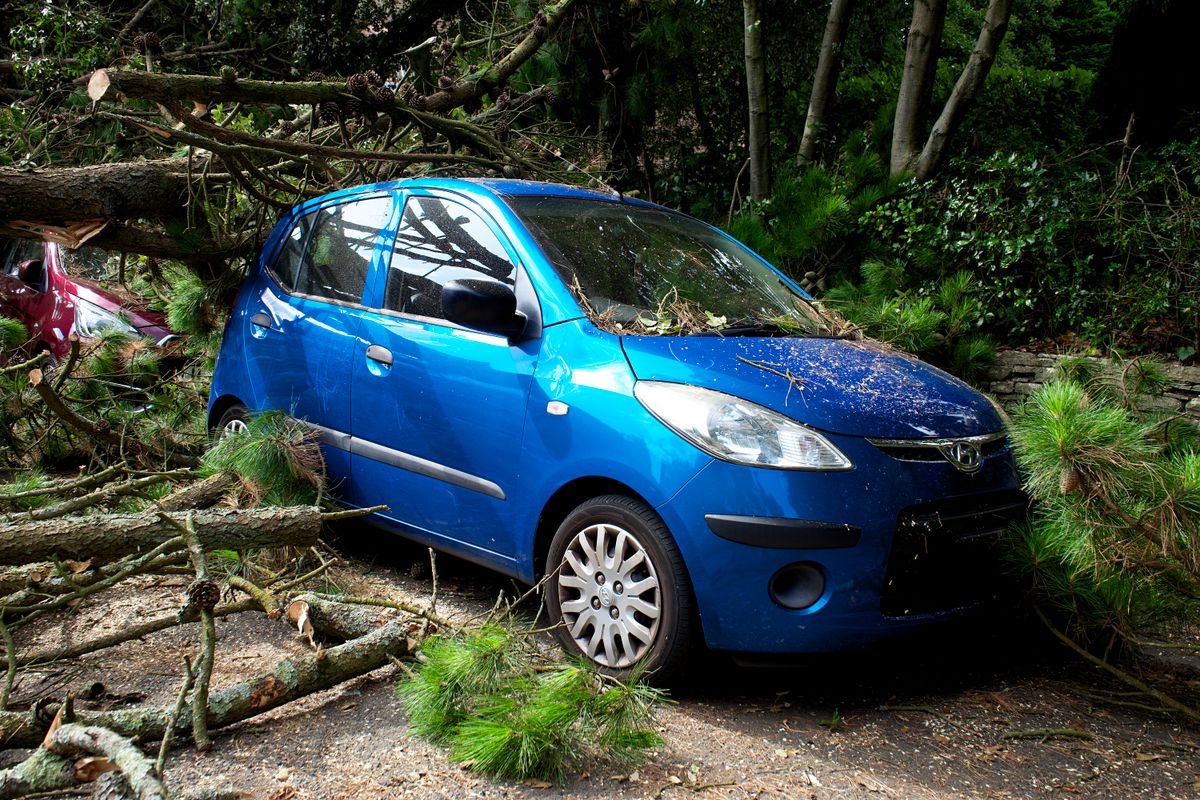
Tree damage is comprehensive regardless of whose tree it was, though your insurer may pursue a negligent property owner.
Storm-chasing scams
After a storm, expect door-to-door dent repair "specialists" and unsolicited calls. Warning signs: pressure to sign an "assignment of benefits," requests for your deductible in cash up front, and no local address. Use your insurer's network or a shop you've vetted.
Your deductible
Some drivers set a low comprehensive deductible for this reason. Glass-only claims often have a separate, lower deductible or none.
Coverage terms and catastrophe procedures vary by insurer. This is general information, not insurance advice.
Getting ready when a storm is forecast
A little preparation can reduce damage, and it makes the claim smoother if damage happens anyway. Weather coverage comes from comprehensive, so start by confirming you actually have it. A liability-only policy doesn't pay for storm damage to your own car.
- Check your declarations page for comprehensive coverage and the deductible amount.
- Don't wait for a named storm to add coverage. Insurers commonly stop accepting new policies and coverage changes in affected areas once a major storm is imminent.
- Take a few dated photos of the car in its current condition. They help separate new damage from old.
- Move the car into a garage or a covered parking structure, or at least away from trees and power lines.
- If flooding is possible, park on higher ground.
- Keep your policy number and your insurer's claims number somewhere you can reach without power.
A car cover or thick blankets offer some protection against small hail, though they won't do much against large stones.

Unrepaired damage from an earlier storm
In areas that get hail every year, it's common for a car to be hit more than once. That creates a problem if you took a payment for an earlier claim and didn't fix the car.
Insurers generally won't pay twice for the same dent. When a new claim comes in, the adjuster may compare the damage with photos from the earlier file and deduct anything that was already paid for. On a car with years of layered hail damage, sorting old from new can lead to disputes and a smaller check than you expected.
If you're financed, the lender's name is usually on the settlement check, so you may not have the option of keeping the money anyway. If you own the car outright and decide not to repair, keep the prior claim paperwork and photos. You'll need them to show which damage is new. Unrepaired damage can also lower the car's actual cash value if it's later totaled, since the insurer values it in its damaged condition.
A realistic example
Picture this: Luis is at work when a hailstorm passes over the parking lot. His pickup ends up with dozens of dents on the hood and roof. Before the ice melts, he photographs the truck from every side and takes a picture of hailstones on the pavement next to it. He also saves the weather service warning for his county.
He files a comprehensive claim that afternoon and books a slot at the insurer's drive-through inspection site. The next morning, someone knocks on his door offering to repair the truck and "take care of" his deductible. Luis declines.
He takes the truck to a paintless dent repair shop he researched. Under the shop's inspection lights, technicians find more dents than the first estimate listed, and the shop submits a supplement. Luis pays his deductible (an illustrative $500) once for the whole storm, then files the final invoice with his photos in case another storm hits next season.
Common questions
Does car insurance cover flood damage?
It does if you carry comprehensive coverage, which handles flooding along with hail, wind and falling objects. A liability-only policy won't pay for water damage to your car. Homeowners and standalone flood insurance policies generally don't cover vehicles either. If your car was flooded, don't try to start it, and tell the adjuster how high the water reached inside.
Is hail damage considered an act of God by insurance companies?
"Act of God" isn't a phrase most auto policies use. Weather damage is simply a comprehensive loss. What matters in practice is that no driver caused it, so a hail claim usually isn't treated like an at-fault accident. You still pay your comprehensive deductible, and the claim still shows up in your claims history.
Will a hail claim raise my car insurance rates?
A single comprehensive weather claim usually has a smaller effect than an at-fault accident, and many insurers don't surcharge for it at all. Rates can still rise across a whole region after a heavy storm season, because insurers adjust pricing based on overall losses in an area. That kind of increase isn't tied to your individual claim. Rules vary by insurer and state.
Take dated photos of your car before storm season starts, so any new damage is easy to prove.